Rebuilding Learner Momentum Through Strategic UX Design
Redesigned learner onboarding to reduce cognitive overload and improve engagement — matching the product's rhythm to how working professionals actually learn.
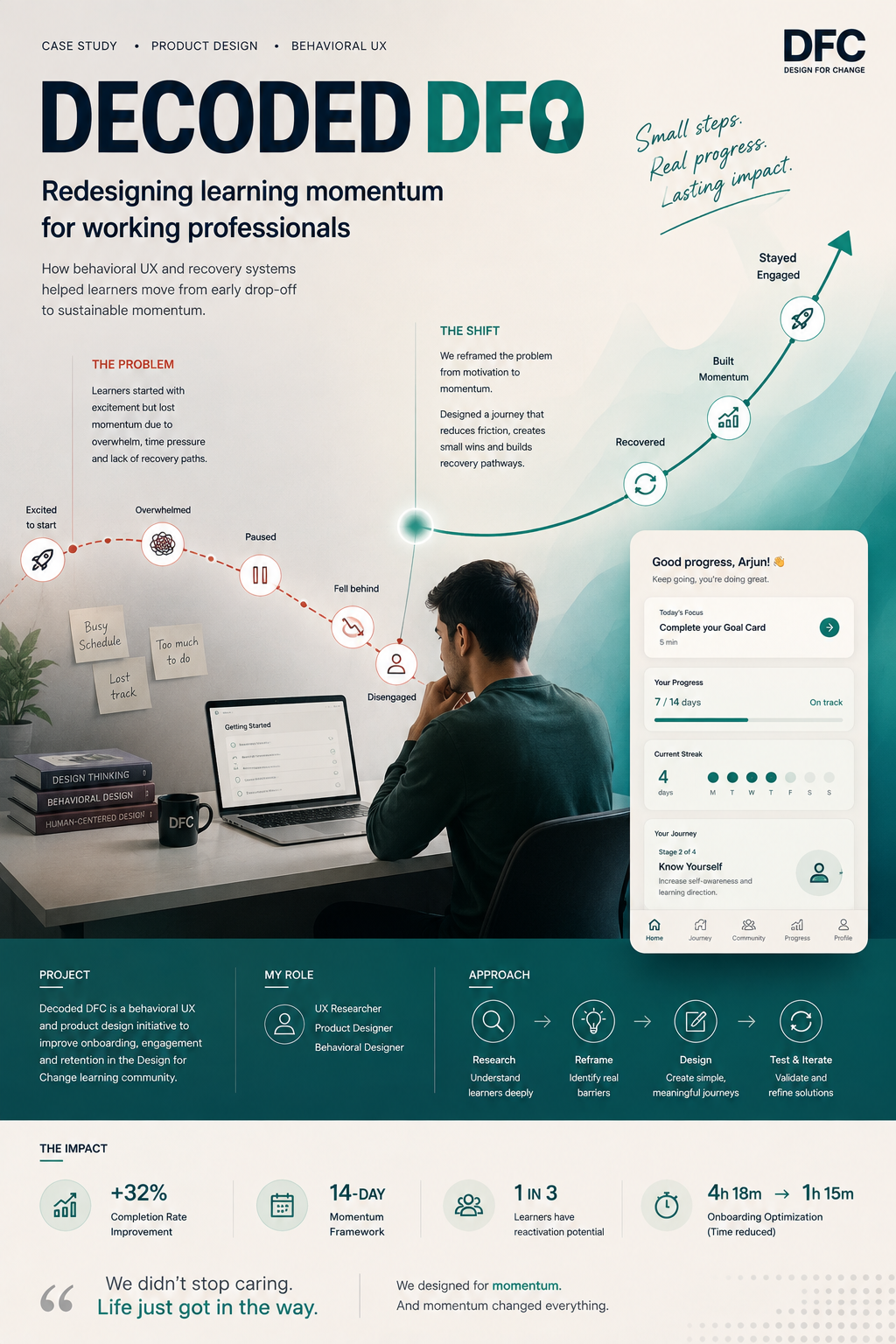
Decoded DFC is a learning product for working professionals. Strong content was not translating into completion — new learners arrived motivated but lost momentum within the first week.
I led research and redesigned the onboarding experience to reduce cognitive overload, clarify where to begin, and rebuild momentum around realistic schedules.
GeographyThe landscape learners moved through
Problem
The original 7-day onboarding assumed uninterrupted daily study. For working professionals juggling jobs and life, that pace created pressure, guilt, and early drop-off rather than progress.
No obvious starting point after sign-up
Too much content surfaced at once
First-week drop-offs concentrated around day 3–4
A 'lifetime membership' mindset that quietly removed urgency
ChemistryResearch methods & what reacted
Research
I combined quantitative reach with qualitative depth to understand both the scale and the emotion behind the drop-off.
162
Survey participants
12
In-depth interviews
BiologyHuman behavior & needs
Key Insights
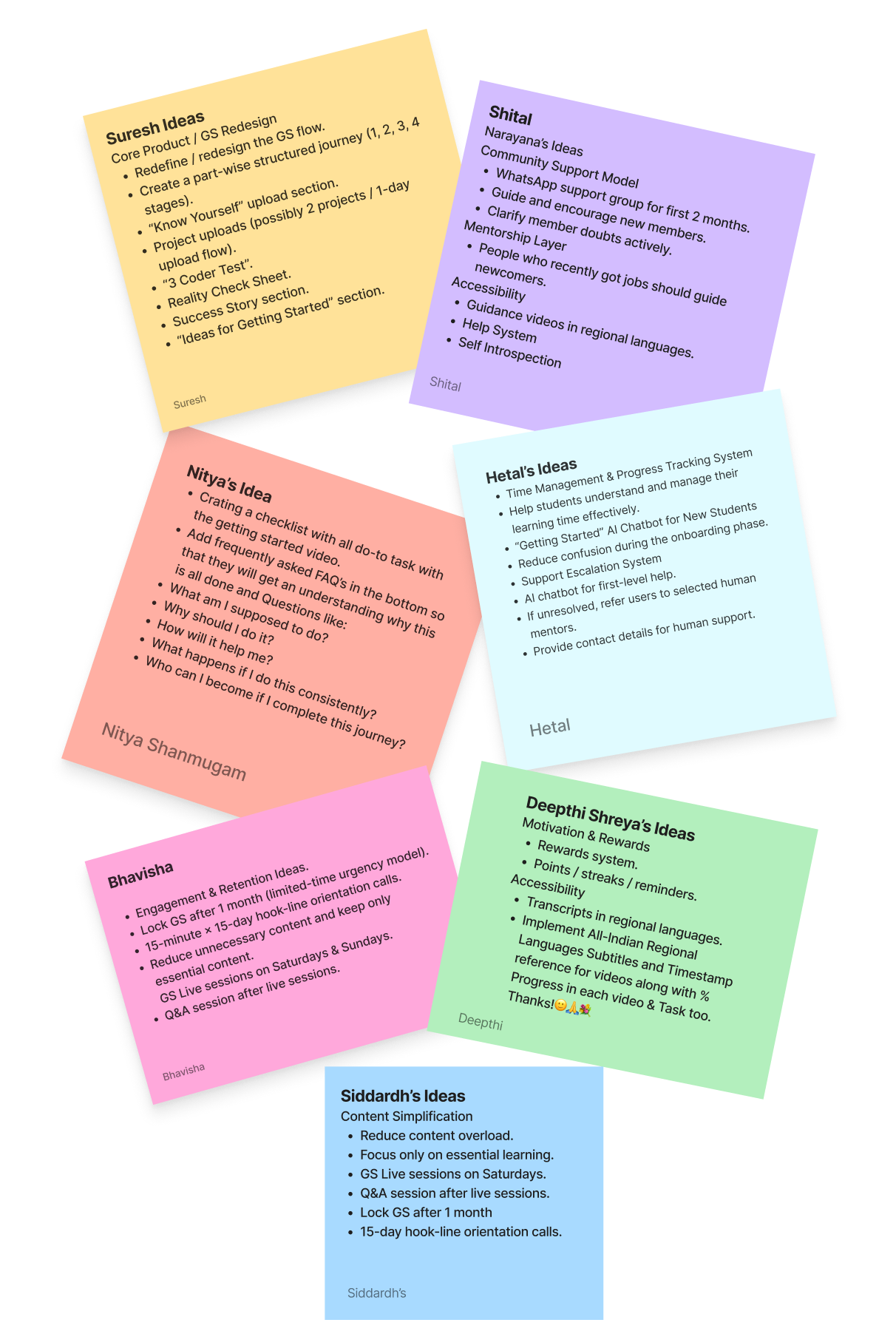
Lack of time was the dominant barrier — not lack of motivation
Content overload made learners freeze before they started
A confusing starting point eroded early confidence
The lifetime-access mindset led to 'I'll start later' indefinitely
MathematicsThe numbers behind the work
The Numbers
235+
Learner touchpoints
162
Survey participants
71%
Call response rate
+32%
Completion improvement
PhysicsThe forces & friction at play
Behavioral Forces & Strategy
Rather than adding features, I restructured the experience around momentum. Onboarding became a guided, staged path with a single focus at each step and a realistic timeframe that respected working schedules.
Pace the journey to real-life availability, not ideal availability
Give every learner one clear next action
Reduce visible surface area early, reveal depth progressively
Turn lifetime access into early momentum, not deferral
Design EngineeringKey product decisions
Key Product Decisions
Expanded onboarding from 7 days to 14 days to match real working-professional behavior — trading artificial speed for sustainable momentum and completion.
Four structured learning stages replacing a flat content dump
A 14-day momentum challenge to anchor the early habit
Progressive disclosure to cut first-session cognitive load
A persistent, single 'next step' for every learner
Design EngineeringUser flow
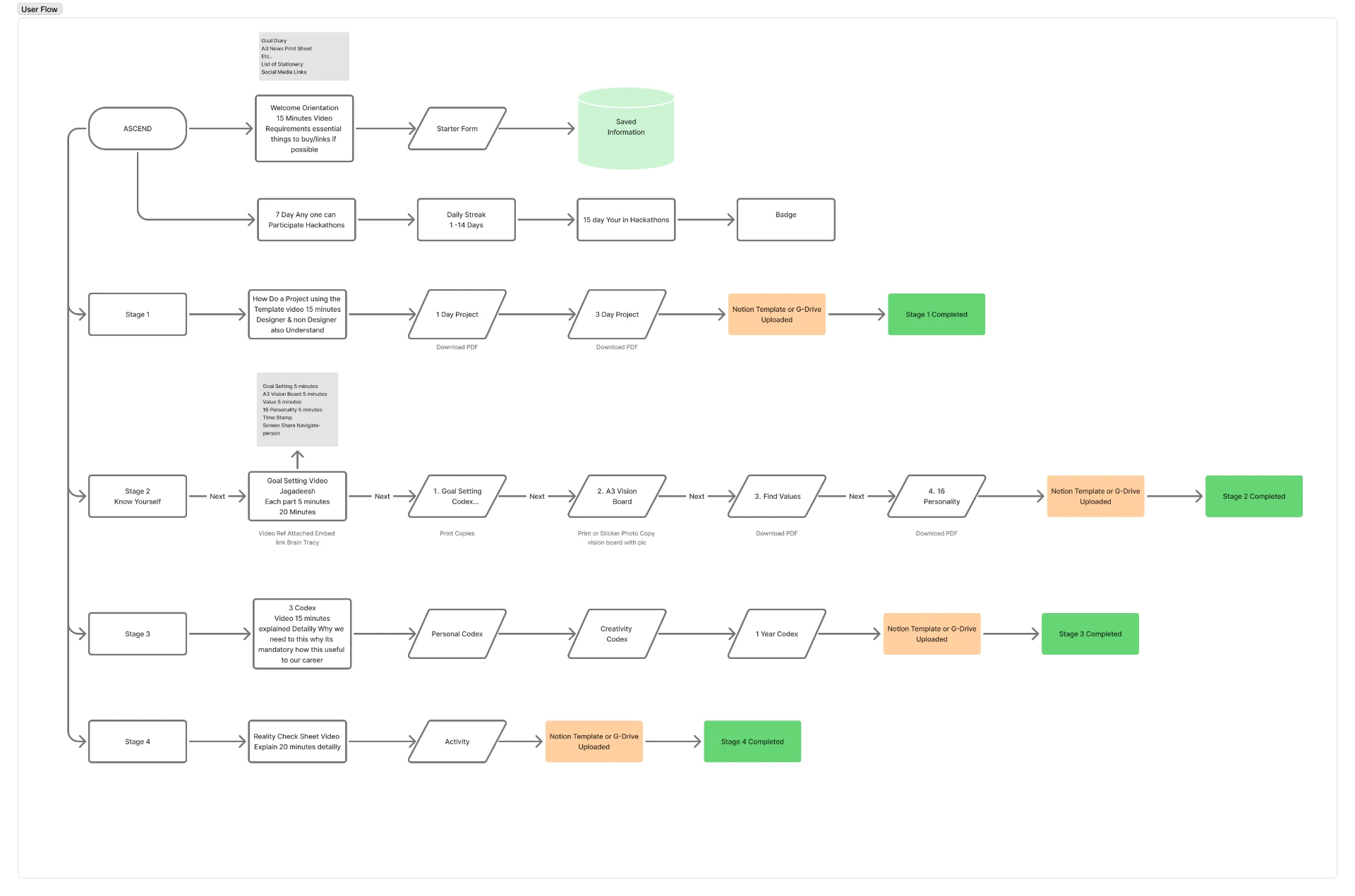
User Flow
The redesigned flow moves from a focused welcome, into a paced stage-by-stage path, with the 14-day challenge running alongside as a momentum spine.
Low-fidelity wireframes prioritised clarity of the next action and a calm, uncluttered first session.
Wireframe set — staged onboarding + daily momentum view
Design EngineeringFinal solution
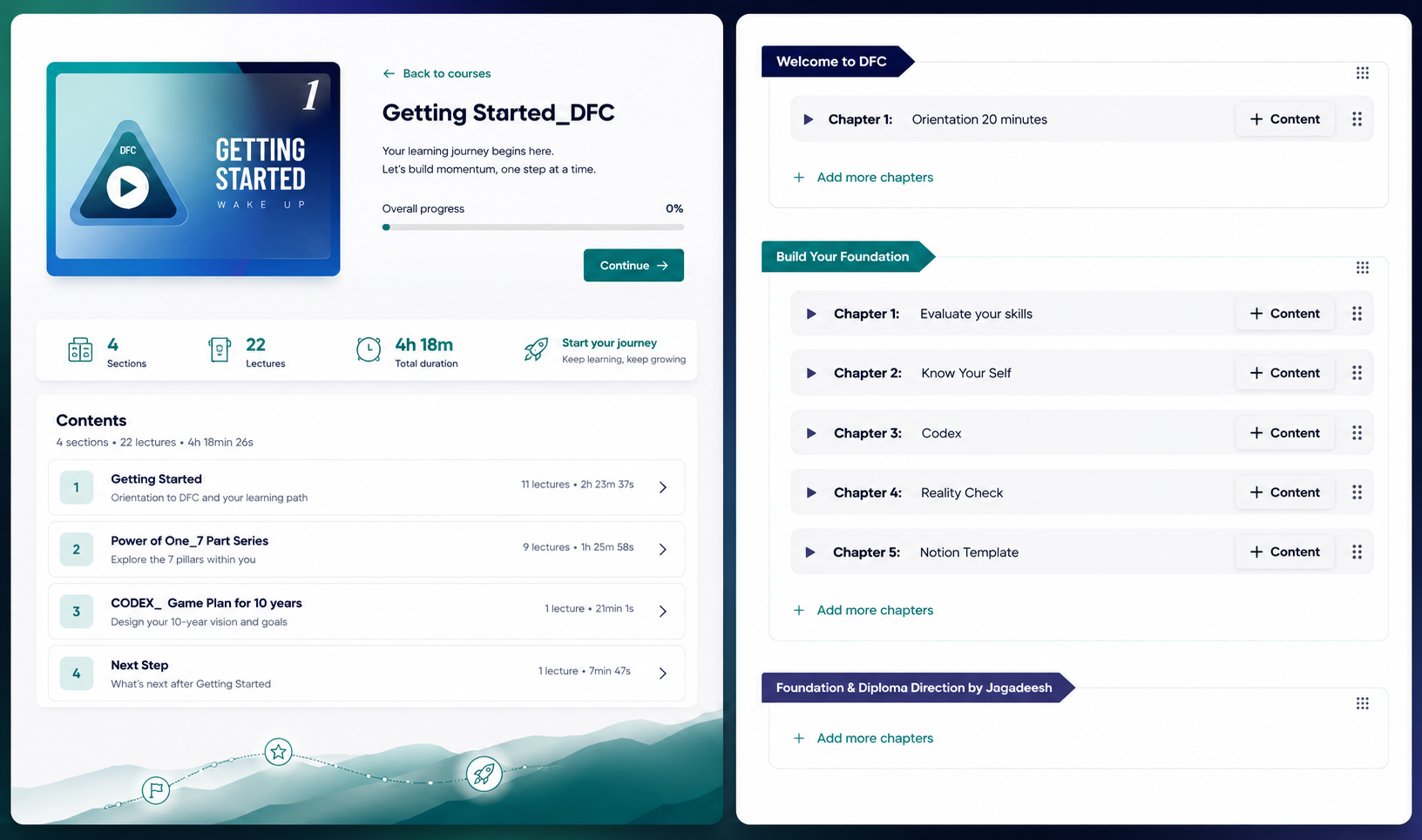
Final Solution
A calm, staged onboarding experience that meets learners where they are: clear starting point, realistic pacing, and a visible sense of progress that compounds across two weeks.
Final UI — staged learning path with momentum challenge
STARSituation · Task · Action · Result
STAR Summary
Situation
A learning product for working professionals had strong content but lost motivated learners within the first week of a 7-day onboarding.
Task
Diagnose the early drop-off and redesign onboarding to rebuild momentum around real working-professional schedules.
Result
68% Week-1 drop-off identified and reframed into a 14-day momentum journey, lifting completion by ~32%.
Action
Planned and ran the survey (162) and interview (12) study
Synthesised findings into behavioral themes and opportunity areas
Reframed onboarding around realistic professional schedules
Designed the staged learning structure and 14-day momentum challenge
TestingValidation & usability
Testing & Validation
Concepts were pressure-tested against the behavioral themes from research — checking that each step gave learners one clear next action without overload.
Usability testing details: To Be Added
IterationWhat we refined
Iteration
The pivotal iteration was pacing: the original 7-day onboarding was expanded to 14 days after research showed working professionals needed realistic, sustainable rhythms rather than artificial speed.
ImpactOutcomes
Impact
+32%
Completion rate
4
Structured stages
14-day
Momentum challenge
↓
Cognitive overload
ImpactReflection
Reflection
The biggest lever wasn't more content or features — it was honoring the learner's real life. Designing for actual behavior, not ideal behavior, is what rebuilt momentum.
Next project
AWIANA
Reducing Parent-Child Disconnection Through Low-Effort Daily Rituals